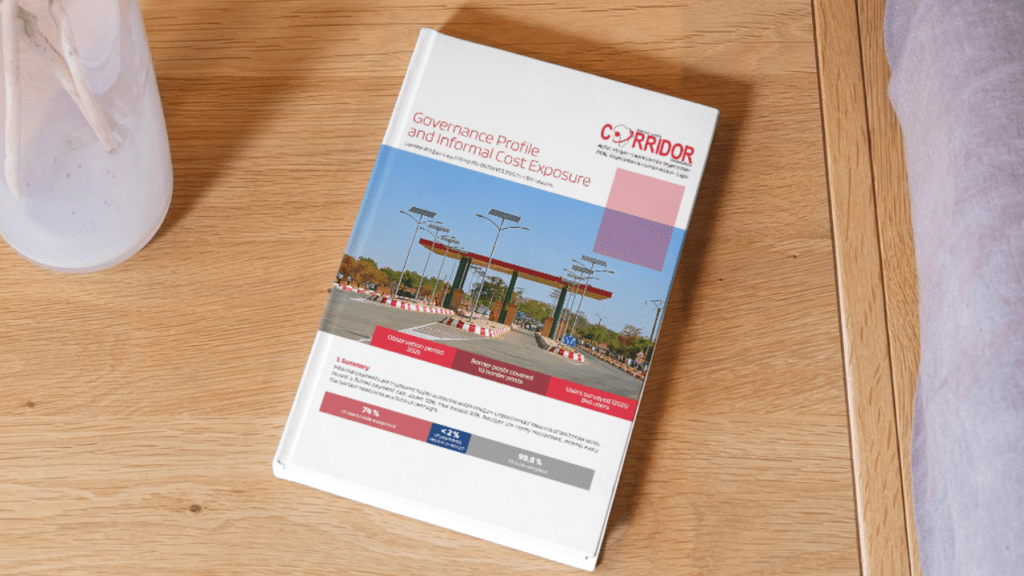
The Abidjan–Lagos Corridor Organization (ALCO) has released the findings of the ENTRAVES 2025 survey, conducted among 845 users across ten border posts. This report sheds light on the persistence of informal payments and their impact on trade facilitation along one of West Africa’s most strategic regional integration routes.
🔎 Key Findings
Systemic informal payments: 9 out of 10 border posts recorded forced payments above 50%, with 4 exceeding 80%.Opaque transactions: Less than 2% of payments were accompanied by receipts, making accountability nearly impossible.Gender disparities: Women reported higher exposure (80%) compared to men (70%), with the sharpest gap observed at Kodjoviakopé.Checkpoints overload: Nigeria recorded 13.3 checkpoints per 100 km, more than four times the regional norm of 3, despite recent efforts to reduce them.
📌 ALCO’s Recommendations
- To address these challenges, ALCO calls for:
Establishing a regional complaint mechanism with quarterly reporting to strengthen accountability. - Training border agents (Immigration, Police) on ECOWAS users’ rights, particularly at Noé, Noépé, Akanu, Elubo, and Aflao.
- Rationalizing checkpoints along the Sèmè–Lagos section in support of ongoing government efforts.
- Ensuring annual data collection, systematically disaggregated by gender, to monitor reforms.
💡 Toward Greater Transparency
The challenge lies not in the regulatory framework but in its enforcement and supervision. ALCO has taken a significant step forward with the deployment of a QR‑code reporting system, enabling users to report obstacles once outside the border post. This innovation removes a major barrier to complaints and paves the way for measurable accountability in upcoming survey waves.