Lomé, Togo – 30 October 2026
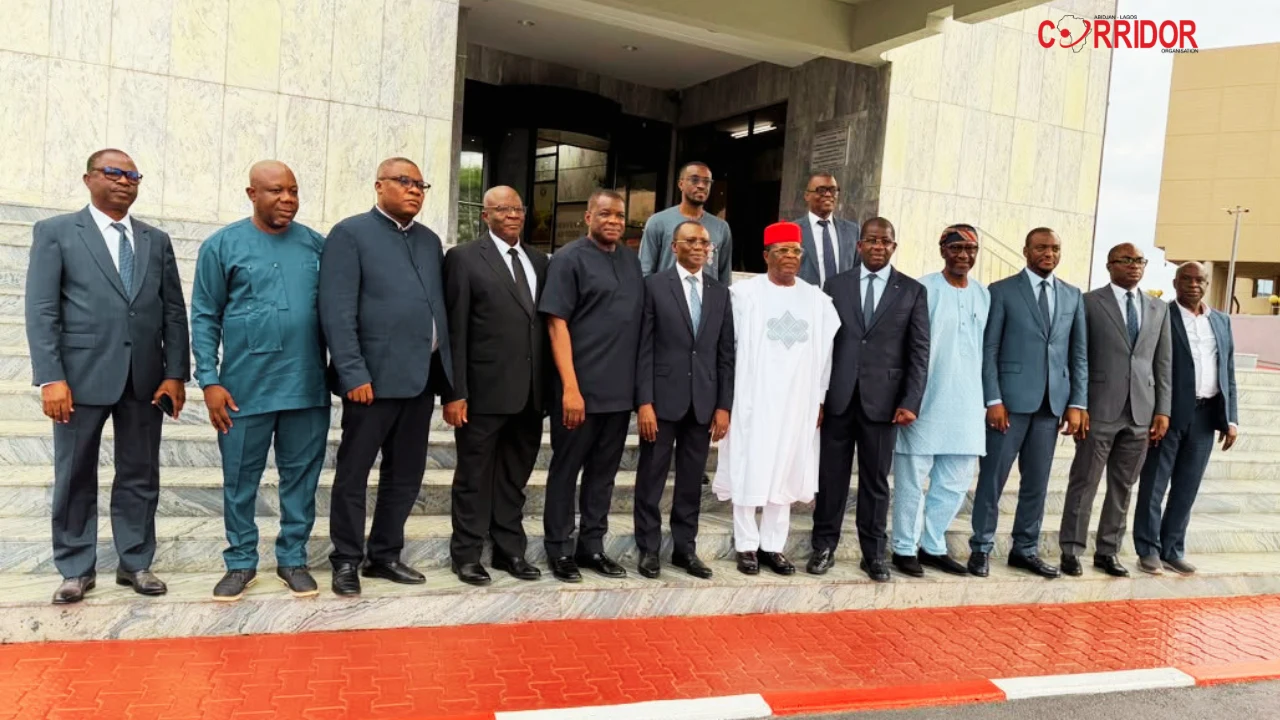
From 26 to 30 October 2026, Lomé, the capital of Togo, hosted a series of high-level meetings dedicated to the Abidjan–Lagos Corridor Highway Development Project. During the 23rd Experts Committee Meeting, the second Board of Directors Meeting of the Abidjan–Lagos Corridor Management Authority (ALCoMA), and the 23rd Ministerial Steering Committee Meeting, the Abidjan–Lagos Corridor Organization (OCAL/ALCO) presented its operational expertise and reaffirmed its readiness to contribute to the success of this strategic regional integration project.
Held under the auspices of the ECOWAS Commission, the meetings addressed progress on technical studies, resource mobilization, land-related issues, trade and transport facilitation, and the operationalization of ALCoMA.
Proven Technical Expertise on the Ground
During the 23rd Experts Committee Meeting, held on 26 and 27 October, OCAL, represented by its Transport Programme Assistant, Mr. YAKPO OSSOBE Kodjo Edem, presented its experience in corridor performance monitoring and trade and transport facilitation.
Before experts and representatives of the five Corridor countries — Côte d’Ivoire, Ghana, Togo, Benin and Nigeria — the Organization highlighted:
- Its operational network of eight Intervention Units located at border crossings along the Corridor;
- Its surveys and data collection activities on border crossing times and obstacles to movement;
- Its initiatives in corridor performance monitoring and the development of a regional observatory;
- Its QR Code-based mechanism for reporting obstacles to the free movement of people and goods.
These achievements provide tools that can support regional efforts to improve trade flows, safety and the overall performance of the Abidjan–Lagos Corridor.
OCAL–ALCoMA: Complementary Mandates Reflecting the Vision of Member States

On 29 October, ALCoMA’s second Board of Directors Meeting provided an important opportunity for dialogue on prospects for collaboration between the two institutions.
The Executive Secretary of OCAL, Dr. Hortense ME, presented the Organization’s institutional and operational achievements and the opportunities for complementarity with ALCoMA.
She recalled that this complementarity is not a new direction. As early as 2019, the Ministers of Health and Transport of the five countries had encouraged close collaboration between OCAL and ALCoMA. This direction was reaffirmed in the Cotonou Declaration of 7 July 2022, which emphasizes the comparative advantages of each institution.
Established in 2002, OCAL has more than twenty years of experience in coordinating cross-border interventions. Its activities cover five priority areas: cross-border health, corridor performance monitoring and transport facilitation, border hygiene, the free movement of people and goods, and road safety.
In the context of the Abidjan–Lagos Highway Development Project, OCAL highlighted its capacity to make a practical contribution from the current phase of the project, particularly through awareness-raising and information-sharing among communities, transport operators and road users, dialogue with local stakeholders, and the communication of concerns from the field.
Its experience in data collection and analysis is also an asset that could support future corridor performance monitoring and the assessment of the project’s benefits for communities.
Renewed Commitment at Ministerial Level

The meetings in Lomé concluded on 30 October with the 23rd Ministerial Steering Committee Meeting of the Abidjan–Lagos Highway Project, bringing together representatives of the five Member States, ECOWAS and project partners.
On this occasion, OCAL’s Executive Secretary reaffirmed the Organization’s readiness to contribute to this regional ambition, while respecting the mandates and comparative advantages of each institution.
She emphasized that the success of the project would depend not only on the construction of high-quality infrastructure but also on its ability to enable smoother and safer movement, facilitate trade and bring tangible improvements to people’s travel conditions.
The discussions held in Lomé opened up encouraging prospects for strengthening collaboration between OCAL and ALCoMA.
OCAL intends to continue this dialogue and contribute, alongside Member States and its partners, to the development of an integrated, efficient, safe and high-performing Abidjan–Lagos Corridor, for the benefit of the region’s economies and populations.